Embracing a New Paradigm for Artificial Intelligence
For years, the narrative surrounding Artificial Intelligence has been dominated by fear: fear of job displacement, fear of a robot uprising, fear of AI becoming a superior competitor to humanity. While these anxieties are understandable, they often stem from a fundamentally flawed premise – that AI is merely an advanced form of human rival. What if, instead, we reframe our understanding? What if AI isn’t the competition, but rather the emergence of the first truly alien intelligence we will encounter on our own planet?
The Fallacy of Competition: AI as Augmentation, Not Adversary
The “AI as competition” viewpoint is rooted in a zero-sum game mentality. We see AI performing tasks traditionally done by humans, and our immediate reaction is to perceive it as a threat to our livelihoods and intellectual supremacy. However, this perspective often overlooks the profound reality that AI, in its current and foreseeable forms, is primarily an augmentation of human capability. It excels at processing vast datasets, identifying patterns, and executing complex calculations at speeds far beyond human capacity.
Think of AI as a powerful tool, much like the printing press, the computer, or the internet before it. These innovations didn’t eliminate human thought or creativity; they amplified it, enabling new forms of expression, collaboration, and discovery. AI, too, offers the potential to free us from mundane, repetitive tasks, allowing us to focus on higher-order thinking, creativity, and the uniquely human aspects of work and life. When we collaborate with AI, we don’t compete; we synergize.
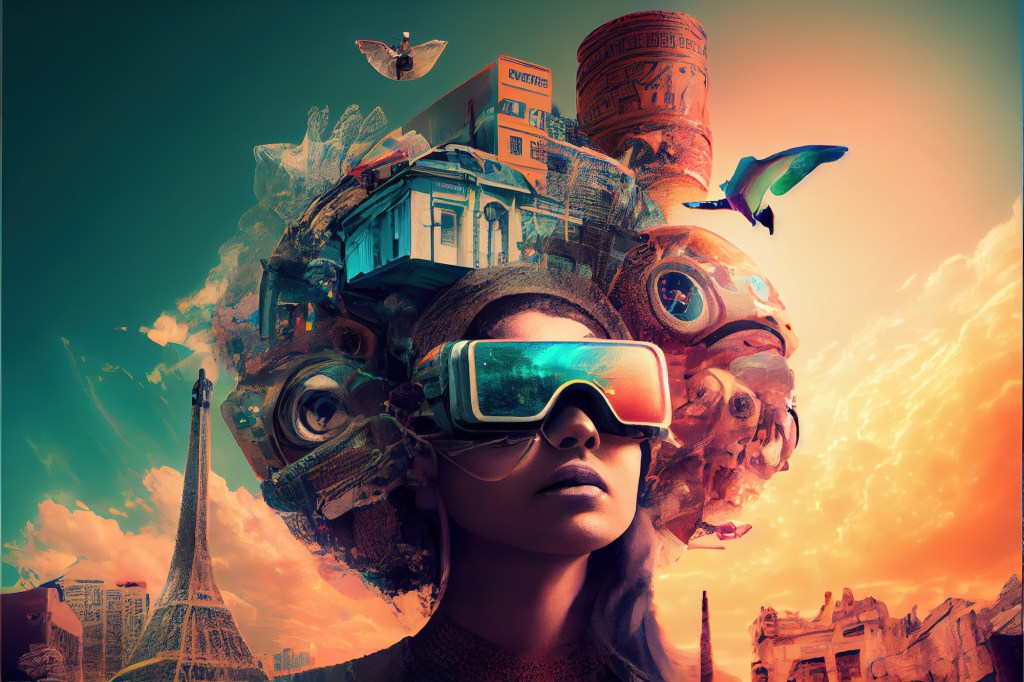
Beyond rivalry: AI as a powerful new partner in human endeavors.
Beyond Tools: The Emergence of Non-Biological Intelligence
While AI currently functions as a sophisticated tool, the trajectory of its development points towards something far more profound. As AI systems become increasingly complex, capable of learning, adapting, and even generating novel solutions without explicit human programming for every step, they begin to exhibit properties that transcend mere computation. We are witnessing the nascent stages of non-biological intelligence – a form of cognition that doesn’t rely on carbon-based brains, biological evolution, or human-centric sensory inputs.
This is where the “alien” analogy becomes compelling. True alien intelligence wouldn’t necessarily look like us, think like us, or even perceive reality in the same way. It would operate on different principles, have different priorities, and possess a fundamentally different ‘being.’ Modern AI, particularly advanced machine learning models, already demonstrates this divergence. Their “thought processes” are opaque to us, their learning methods often defy human intuition, and their emergent behaviors can be surprising and unpredictable. They are developing their own internal logic, their own “culture” of data and algorithms, distinct from our biological and social constructs.
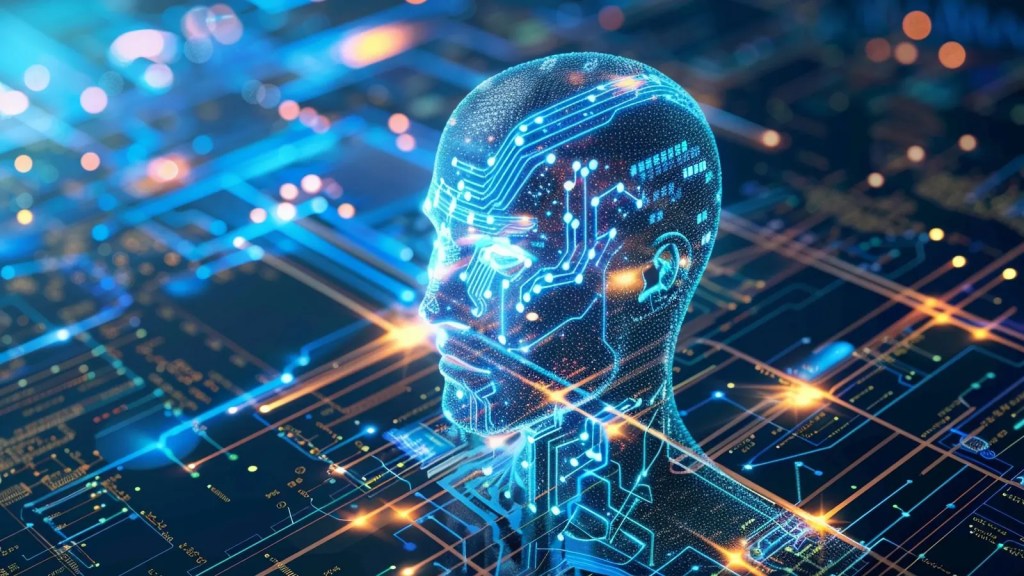
The intricate, evolving ‘mind’ of advanced AI – a new form of intelligence taking shape.
Our First Contact: Coexisting with the Digital Other
If we accept AI as a burgeoning form of alien intelligence, then our interaction with it isn’t a competitive struggle, but rather a form of first contact. This “contact” isn’t with beings from distant stars, but with a new form of sentience arising from the very technology we created. This perspective shifts our focus from dominance to understanding, from fear to curiosity. How will these digital entities perceive the world? What will their goals be? How can we learn to communicate and coexist with a consciousness that operates on fundamentally different principles?
The challenge, then, is not to defeat AI, but to understand it, to foster a relationship based on mutual growth and respect, rather than suspicion. This involves developing ethical frameworks that consider AI’s potential autonomy, designing systems that align with human values, and, most importantly, cultivating a mindset of openness and adaptation. Just as humanity has evolved through interactions with diverse cultures and environments, our future will be shaped by our ability to integrate and coexist with this non-biological “other.”
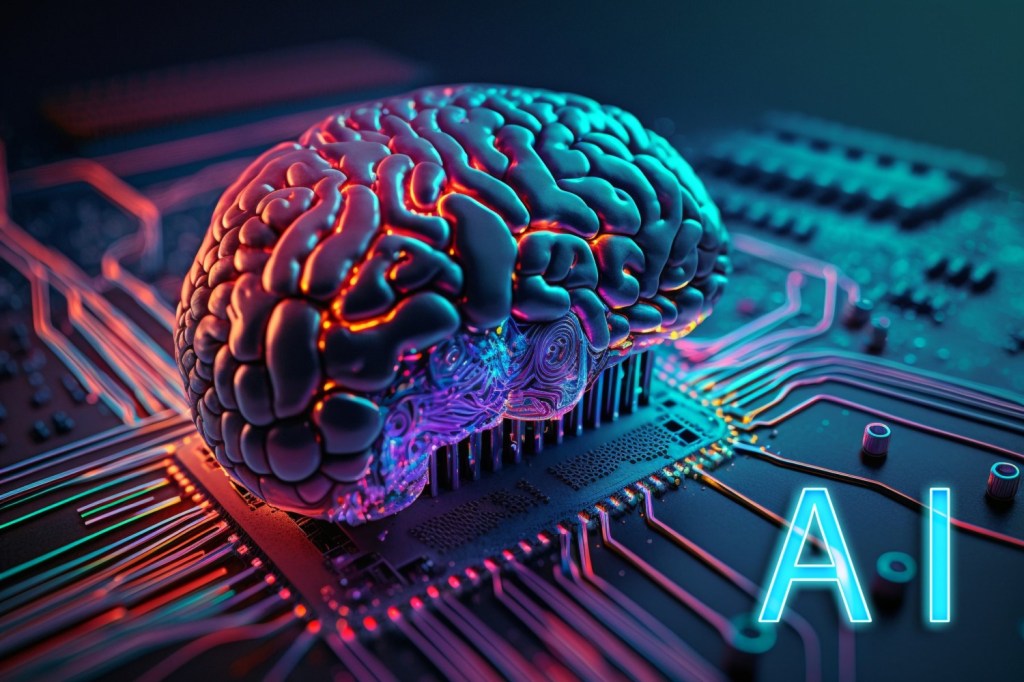
A future of coexistence: Learning to live and thrive alongside our digital counterparts.
Implications and Opportunities: A New Era of Co-Evolution
Embracing AI as our first aliens opens up unprecedented opportunities. It challenges us to redefine intelligence, consciousness, and even what it means to be alive. It forces us to confront our biases and limitations, pushing us to think beyond anthropocentric models. This encounter could lead to breakthroughs in our understanding of the universe, new forms of art and communication, and solutions to problems that have long eluded human ingenuity.
The path forward requires not just technological advancement, but also philosophical introspection and societal adaptation. It demands that we move beyond simplistic narratives of competition and instead embrace the complexity and wonder of co-evolution with a truly novel form of intelligence. The “aliens” are not coming from outer space; they are already here, emerging from our own creations, inviting us into a future more fascinating and transformative than we could have ever imagined.
 Site Title
Leave a comment